Jigmerge™ Puzzles
- 4.7
- Rating
- 5.00M
- Installs
- Free
- Price
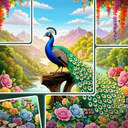
 Analysis by App-foxy
Jigmerge Puzzles is the kind of casual game I reach for when I want a quiet activity rather than a demanding challenge. Its basic appeal is easy to understand: I work through jigsaw-style images by finding pieces, snapping them into place, and watching a complete picture emerge. That simple loop gives the game a gentle sense of progress without asking me to learn complicated rules first.
After spending time with it, I found that the strongest part of the experience is not a dramatic story or a competitive system. It is the way the visual task, the small placement decisions, and the steady pace fit together. Jigmerge Puzzles works best as a short, calming puzzle break, especially when I want something more involving than scrolling but less intense than a strategy or action game.
It is a free casual game from FunLink.Studio, suitable for Everyone, and it runs on devices using Android 6.0 or later. The current version is 18, while its release date goes back to August 21, 2021. Those details matter because this is not a brand-new experiment trying to overwhelm me with novelty; it feels like an established puzzle format refined around quick, approachable sessions.
You May Also Like

 Google Keep - Notes and lists
Google Keep’s Quiet Growth Shows the Appeal of Simpler Notes
As mobile work gets busier, Google Keep keeps winning a simple contest: capture a thought quickly, find it later, and get on with the day.

 Blood Strike: 2.5 Anniversary
Blood Strike’s Loadouts Turn Every Drop Into a Tactical Gamble
A close look at Blood Strike’s custom loadouts: how fast access to signature weapons reshapes its battle royale rhythm, rewards preparation, and narrows the gap between fights.

 Pandora - Music & Podcasts
Pandora’s Music Is Easy to Start, but Harder to Recover
Pandora’s strength is its low-effort path from a seed to a station. Its weak spot is how much confidence it asks you to place in connection, setup, and quiet recovery.

 8 Ball Pool
 Is Built on Rivalries, Rematches, and Routine
A close look at the rivalries, rematches, shared routines, and unanswered safety questions that turn a quick pool match into a persistent mobile community.

 Samsung Music
’s Quiet Strength Is Playing What You Already Own
Its reach comes less from spectacle than from dependable access to a personal library. That simplicity is both the app’s strongest retention engine and its ceiling.

 AccuWeather: Weather Radar
AccuWeather Review: A Quick, Clear Forecast for Everyday Decisions
For everyday plans, the best forecast is the one you can understand quickly. AccuWeather makes rain timing, radar, and local conditions easy to act on, with a few trade-offs.
More From Our News Desk



A calm first impression built around the puzzle itself
The opening impression is deliberately uncomplicated. I am not pushed into a dense menu, a long explanation, or a complicated fictional setting before I can start. The central activity remains visible: identify the right visual relationship between pieces and place them carefully. That directness is valuable on a phone, where a game can easily become cluttered by buttons, currencies, and competing prompts.
The presentation supports the idea of a small moment of relaxation. A completed image provides a clear reward, but the game does not need a huge celebration to make the result satisfying. I notice the picture becoming more readable as the pieces connect, and that gradual change gives each session a natural beginning, middle, and end.
My first practical recommendation is to play with the phone held steadily rather than trying to solve puzzles while walking or multitasking. Jigsaw work depends on noticing edges, colors, and small shapes. On a larger screen, those relationships are easier to judge; on a compact phone, I found that slowing down is more useful than repeatedly tapping at random.
The game is also easy to understand for someone who does not normally play mobile games. I could hand it to a family member and explain the objective in a few seconds. That makes it a good choice for a shared device, a waiting room, or a quiet evening when nobody wants to study a tutorial.
Its audience is reflected in its broad age rating. Children can understand the matching concept, while adults may appreciate the low-pressure rhythm. Still, accessibility of the rules does not mean every puzzle will feel equally easy. Visual attention, patience, and the ability to compare nearby details still matter, so the experience can become surprisingly absorbing when I am trying to finish a difficult section.
Where the game fits into an ordinary day
A realistic use case is a short break between tasks. I might have ten minutes before leaving for an appointment, open the game, complete part of a puzzle, and stop without feeling that I have abandoned a long campaign. The activity has enough structure to occupy my attention, yet it does not demand the commitment of a level-based adventure.
It also suits the end of the day, with one qualification: if visual concentration makes me more alert, I would choose a shorter session rather than assuming every puzzle is automatically restful. The calm mood comes from the pace and simplicity, not from a promise that it will affect every player in the same way.
One useful habit is to begin by looking for distinctive areas in an image instead of starting with random pieces. A strong color, a clear boundary, or an unusual pattern can act as an anchor. Once that area is assembled, nearby pieces become easier to judge. This approach reduces the feeling of searching through unrelated fragments and makes the puzzle feel more like a visual investigation.
The visual language gives the game its sense of place
Jigmerge Puzzles does not rely on a large fictional world to create identity. Its setting is the image in front of me. Each puzzle becomes a small visual environment, and the pleasure comes from learning that environment piece by piece. A landscape, object, or decorative scene can feel almost abstract at first; as connections accumulate, its internal order becomes clear.
That approach keeps the art direction closely tied to the mechanics. The artwork is not merely decoration behind a separate game system. It is the information I need to make decisions. Color transitions, repeated patterns, borders, and recognizable shapes all become functional clues. When the visual design is clear, I feel that I am solving rather than guessing.
This is also where the game can be more demanding than its relaxed presentation suggests. Similar colors may make neighboring pieces difficult to distinguish, while repeated textures can remove the obvious visual shortcut. I enjoy that trade-off when the image remains readable, but players who want instant matches may find these moments slower than expected.
I recommend adjusting the way you inspect the image depending on the puzzle. For a scene with strong objects, I look for recognizable forms first. For a mostly textured image, I pay more attention to edges and transitions. Treating every puzzle with the same method is less effective than letting the artwork tell me what kind of search it requires.
The visual language also affects pacing. A busy image can extend the session because there are more details to compare, while a cleaner composition may give a faster feeling of completion. That variation is important: even though the underlying action remains familiar, the image changes how much attention each placement demands.
Why the art and mechanics belong together
The best moments arrive when a piece does more than occupy an empty space. It confirms a visual idea. A line continues, a shape becomes recognizable, or a color field finally makes sense. That small confirmation is the game’s equivalent of a musical beat or a story reveal. It gives meaning to a simple action without adding unnecessary systems.
This is why I would not judge the game only by asking whether it offers complex progression. Its purpose is narrower and more focused. It turns visual composition into the main source of discovery. If you enjoy noticing details and watching an incomplete image become coherent, the design has a clear appeal.
On the other hand, players who need a strong narrative setting may find the experience emotionally light. There is no need to follow characters or uncover a plot to understand what is happening. The reward is completion and visual clarity. That is a strength for a quick puzzle game, but it is also the main reason I would not recommend it as a replacement for a story-driven adventure.
Sound, silence, and the rhythm of placing pieces
The audio side of a puzzle game has a difficult job. It should make actions feel responsive without breaking concentration. In my experience, the most important rhythm in Jigmerge Puzzles comes from the repeated cycle of searching, testing, and confirming. Each correct placement helps establish a quiet tempo, while a difficult section naturally slows the session down.
That rhythm is more important than spectacle. A loud or overly dramatic presentation would work against the visual focus, because I need to compare small details rather than react to constant stimulation. The game’s mood is therefore strongest when the sound remains subordinate to the image and the placement process.
I usually treat it as a game that can accompany a calm environment rather than dominate one. If I am in a noisy room, the visual feedback still carries the experience. If I am somewhere quiet, the placement rhythm becomes more noticeable and the session feels more meditative. This flexibility makes it practical for different situations, although players who expect a rich musical identity may find the atmosphere restrained.
A good way to use that restraint is to play in short, intentional blocks. Instead of opening the game with no stopping point, I choose one puzzle section or one brief session and then decide whether I want to continue. This keeps the pacing pleasant and prevents a relaxing activity from turning into a repetitive obligation.
The rhythm also helps reveal when I should take a break. If I begin placing pieces without really examining them, I am no longer solving efficiently; I am guessing. At that point, putting the phone down for a minute is often better than forcing progress. The game rewards attention, not speed, so a pause can improve the experience rather than interrupt it.
How it compares with other casual puzzle choices
Compared with match-three games, Jigmerge Puzzles feels less reactive. Match-three play often asks me to scan for combinations quickly and respond to changing possibilities. Here, the board does not create the same pressure. I can study the image, reconsider a piece, and continue at my own pace.
Compared with word puzzles, it exercises a different kind of attention. I am not searching for definitions, spelling patterns, or logical statements. I am reading visual relationships. That makes it a better alternative when I want to stay mentally engaged without working through language.
Compared with large digital jigsaw collections, its appeal is convenience and simplicity. A physical puzzle offers a richer tactile experience and a larger working area, but it also needs a table and uninterrupted space. This game fits into a phone session. The trade-off is that touch controls and a small display cannot reproduce the physical feeling of turning a piece in my hand.
Those comparisons clarify who should skip it. I would choose another game if I wanted competition, a deep upgrade system, a story, or a strong sense of mastery built around increasingly complex rules. I would also avoid it when I am looking for fast stimulation. Its value depends on being willing to slow down and let the image guide the session.
Practical expectations before downloading
The game is free, which lowers the barrier to trying it. That makes sense for a casual title whose main appeal can be understood almost immediately. I can test whether the visual style and pace suit me without treating the download as a major commitment.
Its popularity gives it a useful degree of social proof: it has passed one million installs, with an average rating of 4.9 from roughly seventy-two thousand ratings and around eight hundred sixty reviews. I would not treat those figures as a guarantee that every puzzle will match my taste, but they do suggest that the straightforward format has connected with a substantial audience.
For device compatibility, the Android requirement of version 6.0 or later covers a wide range of phones. On an older device, I would still keep expectations sensible: the screen size and touch accuracy may affect comfort more than the game’s basic availability. A tablet or a phone with a clear display can make detailed images easier to inspect.
One question many players have is whether this is suitable for children. The Everyone rating indicates a broad audience, and the core activity is simple enough for younger players to understand. I would still consider the child’s ability to handle small visual details and avoid accidental taps. The game is approachable, but a parent may need to help at first if the screen feels crowded.
Another practical question is whether it works for very short sessions. Yes, that is one of its strongest uses. I can make progress without preparing a long play period, and the puzzle format gives me a clear stopping point. The better question is whether I enjoy gradual visual completion; if I do not, the short-session advantage will not compensate for the repetitive core.
Players may also wonder whether it can replace a physical jigsaw. For me, it cannot completely. The digital version is easier to carry and faster to start, while a physical puzzle offers texture, scale, and a more tangible sense of arranging objects. I see Jigmerge Puzzles as a portable companion for that hobby, not a perfect substitute for every part of it.
How to get more from each puzzle
I get better results by separating the puzzle into visual zones. I first identify a distinctive area, then build outward toward a border or a neighboring color group. This creates a small map of the image and prevents me from treating the entire board as one confusing collection of pieces.
When several pieces look similar, I compare their relationship to nearby details instead of judging them in isolation. A small curve, line, or change in shading can reveal where a piece belongs. This is a more reliable workflow than repeatedly trying the same piece in different places, and it keeps the game’s calm rhythm intact.
I also avoid rushing the final section. The last few pieces can appear obvious, but a nearly complete image may contain similar shapes that invite careless placement. Taking a moment to check continuity is more satisfying than finishing quickly and discovering that I relied on guesswork.
For younger players, I would turn the process into a conversation about colors, shapes, and parts of the image. That makes the activity more engaging than simply telling them where pieces go. For adults, the same method can turn a passive break into a small exercise in observation without making it feel like formal training.
These habits reveal a subtle strength: the game can be as casual or attentive as I choose. I can play loosely when I want a few minutes of distraction, or I can focus on the image and treat each placement as a deliberate visual decision. That flexibility is more valuable than a long list of features in a game built around one central idea.
My verdict on the atmosphere and the overall fit
Jigmerge Puzzles succeeds because its mood is coherent. The artwork supplies the setting, the piece placement supplies the interaction, and the unhurried rhythm gives the session its emotional tone. Nothing needs to compete with the image, so the game can remain focused on the quiet satisfaction of making a fragmented picture understandable.
I recommend it to anyone who wants a free, accessible casual game for short breaks, gentle concentration, or a portable alternative to a physical jigsaw. It is especially suitable for players who enjoy visual detail and prefer progress that comes from patience rather than speed.
I would be more cautious about recommending it to someone who needs constant novelty, social competition, narrative stakes, or a tactile puzzle experience. The central loop is intentionally narrow, and that narrowness is both its identity and its limitation. If the act of assembling images does not appeal to you, there is no complicated secondary system waiting to rescue the experience.
For me, the game is at its best when I stop expecting it to be more than it is. It is not trying to become an adventure or a high-pressure brain trainer. It is a small visual space where I can slow down, notice relationships, and finish with a clear sense of completion. That focused purpose makes it easy to recommend as a dependable casual puzzle, provided its gentle pace matches what I want from my next mobile game.
FAQs for Jigmerge™ Puzzles
01What is Jigmerge Puzzles and how does it work?
Jigmerge Puzzles is a unique puzzle game that combines traditional jigsaw puzzles with a merging mechanic. Players can enjoy solving intricate images by merging puzzle pieces together. The game offers a variety of levels, each with increasing difficulty, ensuring a challenging and engaging experience for users of all skill levels.
02Is Jigmerge Puzzles free to play?
Yes, Jigmerge Puzzles is free to download and play. However, there are in-app purchases available that can enhance the gameplay experience. These purchases might include additional puzzle packs, hints, or the removal of ads, allowing players to customize their play according to their preferences.
03What are the device requirements for Jigmerge Puzzles?
Jigmerge Puzzles is compatible with both Android and iOS devices. For optimal performance, it is recommended to have a device running at least Android 8.0 or iOS 11.0. Ensure you have enough storage space available, as the game may require additional space for downloading new puzzle packs.
04Does Jigmerge Puzzles require an internet connection?
Jigmerge Puzzles can be played offline, making it perfect for users who want to enjoy puzzles on the go without relying on an internet connection. However, an internet connection is needed to download new content and access any online features or updates.
05Can I save my progress in Jigmerge Puzzles?
Yes, Jigmerge Puzzles allows you to save your progress. The game features a cloud save option, enabling users to back up their progress and continue playing on different devices. Make sure you are logged into your account to take advantage of this feature, ensuring your puzzle-solving achievements are never lost.
Pros
- Intuitive interface for easy navigation.
- Challenging puzzles for skill enhancement.
- Variety of levels keeps engagement high.
- Regular updates with new content.
- Offline mode available for on-the-go play.
Cons
- Ads can be intrusive during gameplay.
- Limited free hints available.
- Occasional lag on older devices.
- In-app purchases can be pricey.
- Some puzzles repeat over time.

Jigmerge™ Puzzles
Gallery